
約8分 · 2026-10-22 更新
Managing a long-term condition while travelling in Vietnam
Insulin in the heat, blood pressure tablets and dehydration, inhalers, dialysis bookings, and the documents that keep a supply moving.
このガイドはEnglishで書かれています。
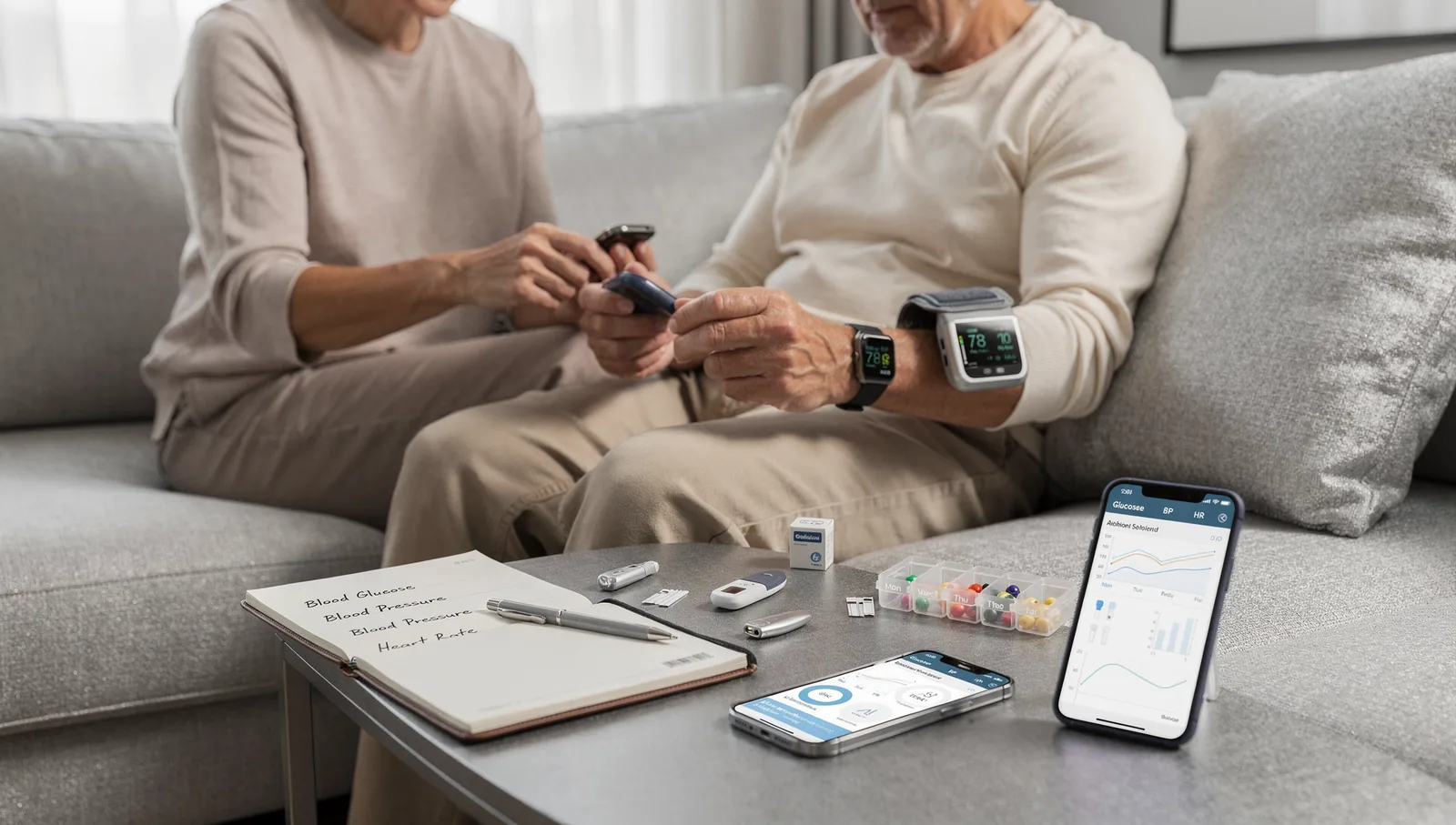
People with a long-term condition travel perfectly well. The ones who run into trouble here are usually not the ones with the most serious diagnosis. They are the ones who assumed the environment would behave like home. That a medicine would survive a day in a backpack, that a pharmacy would stock the same thing, that a body already holding a balance would cope with heat and a thirteen-hour journey.
This page is about the specific things Vietnam changes. It is general information. It does not replace your own prescriber, who knows your condition and whose advice overrides anything here. Do not change a dose because of something you read on a website.
Signs that mean emergency care here
A long-term condition going out of control abroad looks the same as it does at home. Call 115 or go to the nearest hospital emergency department for any of these:
- Chest pain or pressure, especially with sweating, nausea or pain into the jaw or arm
- Breathlessness at rest, or a reliever inhaler that is no longer working
- Blood sugar you cannot bring up, or confusion and drowsiness in someone who takes insulin
- Deep rapid breathing with vomiting and a fruity smell on the breath, which can mean ketoacidosis
- Sudden one-sided weakness, facial droop or slurred speech
- Unusual bleeding or a significant head knock in anyone taking an anticoagulant
- A missed dialysis session with breathlessness, swelling or confusion
- A fever in someone whose immune system is suppressed by treatment, where the usual thresholds do not apply
Heat changes how several medicines behave
This is the connection almost nobody is warned about. It explains a lot of the trouble that shows up in the first week.
Heat makes blood vessels dilate and sweating removes fluid and salt. Both lower blood pressure, so if you already take something that does the same, the effects stack — dizziness on standing, falls, fainting. People put it down to the climate. It is the climate plus the tablet, which is worth raising with your prescriber before you fly.
Several medicines also reduce the body's ability to shed heat. Beta blockers blunt the heart rate response, some antihistamines reduce sweating, and some antipsychotics interfere with temperature regulation. None of that is a reason to stop anything. It is a reason to plan the day around the heat.
Insulin and the cold chain
Unopened insulin needs refrigeration, broadly two to eight degrees Celsius. In use it is usually fine at room temperature for about a month. But room temperature in Vietnam in June is not the room temperature that figure assumes.
- Never put insulin in checked baggage. The hold is cold enough to freeze it, and frozen insulin is discarded rather than thawed
- Carry it in a cool bag or an evaporative cooling pouch, which works well in dry heat and much less well in humidity — so pack a second option
- Hotel minibars freeze things. Put a thermometer in with the insulin for the first day rather than trusting the dial
- Keep pens and vials out of direct sun, out of a car glovebox, and off a motorbike seat. A parked scooter in the sun gets far hotter than the air
- Insulin that has been frozen, has gone cloudy when it should be clear, or has clumps or strands in it, is not used. Carry more than the trip needs for exactly this reason
- Split the supply between two bags and two people, so one loss is not the whole trip
Diabetes: a different day entirely
A travel day changes every input at once. Walking far more than usual, eating at unfamiliar times, rice with most meals, heat speeding absorption from the injection site, a flight across time zones. Together they make the usual pattern unrecognisable for a few days.
Test more often than you would at home, particularly in the first week and particularly before driving or riding anything. Carry fast-acting glucose on your person rather than in a day bag that gets left on a beach towel, And remember that the signs of a low can look exactly like heat exhaustion — sweating, shakiness, confusion. In this climate that confusion is genuinely dangerous.
Check your feet at the end of each day. A diabetic foot in open sandals on hot sand, with reduced sensation, is how a small injury gets missed until it is not small.
Blood pressure, heart and kidney medicines
The pattern here is dehydration. Diuretics, ACE inhibitors and angiotensin receptor blockers all reduce the kidney's margin for handling fluid loss. A day of heat with a stomach bug can tip kidney function in a way that a blood test will show.
Three practical steps. Drink to a schedule rather than to thirst, stand up slowly, and treat any diarrhoeal illness as more consequential than it would be at home. If you are vomiting and cannot keep tablets down, that is a reason to be seen rather than to skip doses and hope. For anyone on a diuretic, a few days of heavy sweating and poor intake is a recognised reason to ask a clinician whether the dose should be reviewed — a question for them, not a decision for you.
Anticoagulants
Warfarin is sensitive to diet. Vietnamese food carries a great deal of leafy green and fresh herb, which is to say vitamin K. A sustained change in intake moves the clotting measurement, and monitoring here needs arranging rather than assuming.
The direct oral anticoagulants are simpler to travel with, because they need no routine monitoring. But they share the main risk. A motorbike fall or a head knock matters much more on them. If you are on any anticoagulant, a head injury in Vietnam is an emergency department visit even when you feel fine, and that is the single most useful sentence in this section.
Carry a card or a note saying what you take, in English, somewhere a stranger would find it.
Asthma, COPD and inhalers
- Bring more reliever inhalers than the trip needs, and keep one on your person at all times rather than in a hotel room
- Heat and humidity trigger symptoms in some people and relieve them in others. Air-conditioned rooms are dry and can irritate airways overnight
- Urban air quality in the larger cities is a genuine trigger, and traffic exhaust at street level on a motorbike is the worst of it
- Incense smoke in temples, and cooking smoke in older kitchens, catch people out in the first week
- A spacer is worth the luggage space. Inhaler technique deteriorates when someone is breathless and frightened
- Know what your written action plan says and bring it. An unfamiliar clinician can work with a plan far faster than with a description
- If a steroid tablet course is part of your plan, ask your own prescriber before travelling whether to carry one
Dialysis, oxygen and anything that needs a machine
These require arrangement weeks ahead, not on arrival. Haemodialysis units in Vietnamese cities do accept visiting patients. But the slots are limited, and they need your recent bloods and virology results in advance. The booking is made before you buy the flight, not after.
Oxygen on a flight is an airline matter needing medical clearance, and concentrators for use where you are staying can be hired in the larger cities with notice. Anything implanted travels with its own card and device identifiers. A pacemaker, a defibrillator, an insulin pump. Those identifiers matter at security and far more if something goes wrong.
The document set
- A current list of every medicine by its generic name, with doses. Brand names change between countries and the chemical does not
- A letter from your prescriber, in English, naming your conditions, your medicines and any implanted device
- A copy of your prescription, for anything that might need replacing here
- Repeat tablets in the original labelled packaging, in hand luggage, not decanted into a weekly organiser
- Your most recent relevant results — an electrocardiogram tracing, recent bloods, a dialysis prescription — as a file on your phone and on paper
- Your insurer's policy number and assistance line, and confirmation that your conditions were declared and accepted before you travelled
- The rules for your medicine in Vietnam and in any country you change planes in, checked before you fly for anything in a controlled group
Running out, and what a doctor here can do
Most long-term medicines have an equivalent available in Vietnam, often as a different brand with the same active ingredient. A doctor here can assess you and prescribe where that is clinically appropriate under Vietnamese law. Some things are harder: specific inhaler devices, certain modified-release formulations, and anything in a controlled category.
A consultation can read your whole list for interactions and duplication, including anything bought over a counter here, identify a local equivalent by generic name, and write the English report your insurer will want. If a hospital or a specialist is the right answer, you are told so plainly, with a referral letter.
What nobody can do is promise a particular medicine before examining you, or replace the prescriber who manages your condition at home.
The short version
Pack more than you need. Keep it in hand luggage in its original box, and split it between two bags. Write your generic names down. Expect heat to lower your blood pressure and dehydration to matter more than at home. Book dialysis and oxygen first. And treat a head knock on an anticoagulant as a reason to go in rather than wait.
参考文献
- CDC Yellow Book — Travelers with chronic illnesses, https://wwwnc.cdc.gov/travel/yellowbook/2026/travelers-with-additional-considerations/chronic-diseases
- Diabetes UK — Travelling with diabetes, https://www.diabetes.org.uk/living-with-diabetes/travel
- NHS — Asthma, https://www.nhs.uk/conditions/asthma/
- World Health Organization — Model list of essential medicines, https://www.who.int/publications/i/item/WHO-MHP-HPS-EML-2023.02