
Đọc 9 phút · Cập nhật 2026-08-05
Home doctor in Vietnam: what to expect when you call one to your hotel
A practical guide for travellers and expats: when a home visit is the right choice, what happens step by step, how language support works, and what paperwork your insurer will ask for.
Bài viết này bằng English.
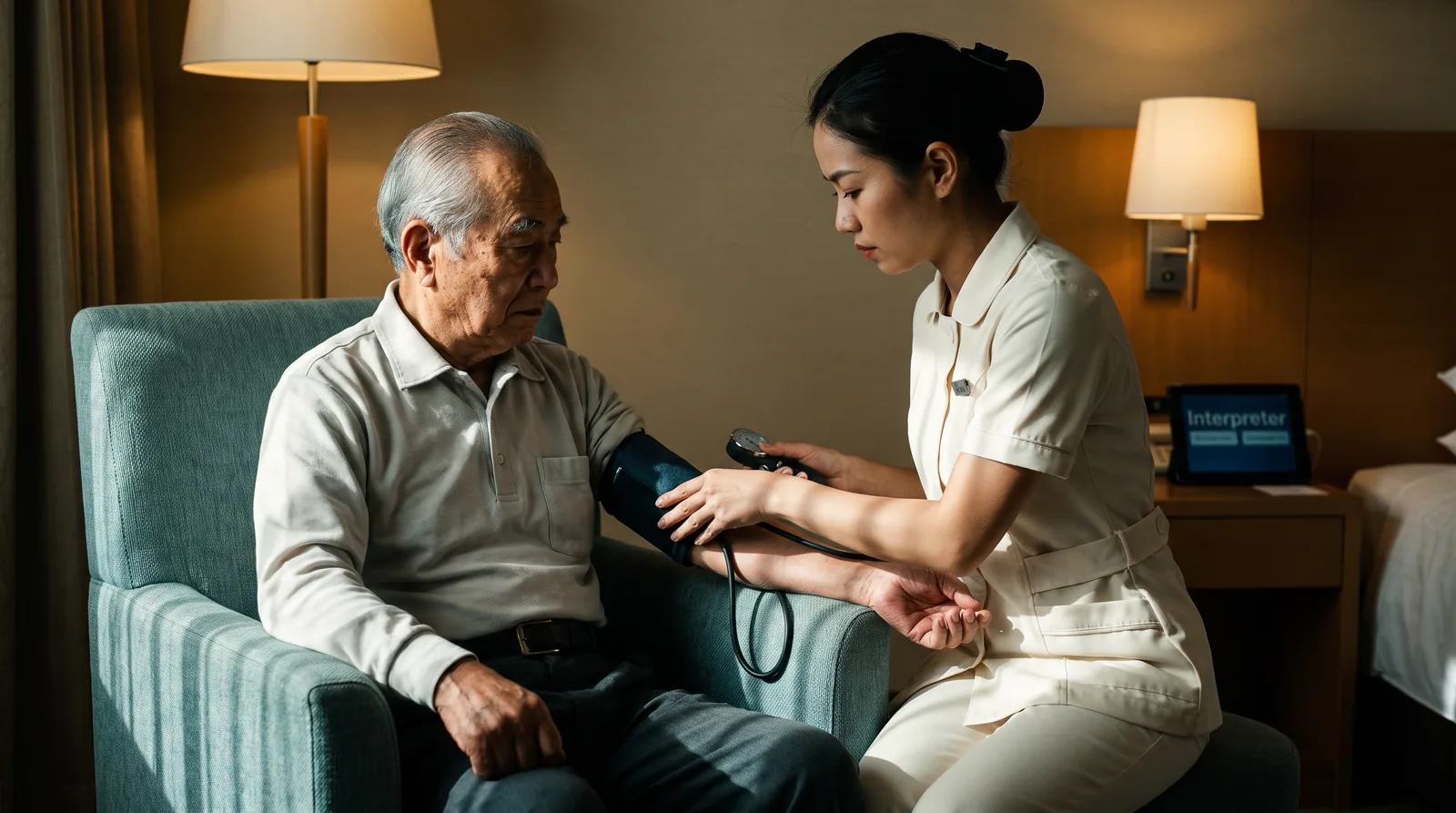
Falling ill abroad is stressful enough without having to navigate an unfamiliar healthcare system, find a taxi to a hospital, or explain your symptoms through a language barrier at a busy emergency desk. Across Vietnam's main destinations — Da Nang, Hoi An, Hue, Ho Chi Minh City and Hanoi — a home doctor visit is a practical alternative for travellers who need medical attention without leaving the place they are staying.
This guide covers when a visit is the right call, what actually happens from the first phone call to the doctor leaving, how language support works, and the paperwork your travel insurer will ask for. Read it before anything goes wrong; come back to it if something does.
When a home visit is the right choice — and when it is not
A home visit suits problems that are unpleasant but stable: fever, stomach upsets, a wound that needs proper cleaning and dressing, dehydration, a chest infection, a medication that has run out. In these cases being examined where you are already lying down is genuinely better than a taxi ride and a two-hour wait.
It is the wrong choice when time itself is the treatment. Do not wait for a doctor to travel to you if any of the following are present — call 115 or go directly to the nearest hospital:
- Difficulty breathing, or breathing that is fast and shallow at rest
- Chest pain, or pain spreading to the jaw or left arm
- Sudden weakness on one side, a drooping face, or speech that has become slurred
- Heavy bleeding that does not stop with firm pressure
- Loss of consciousness, a first-ever seizure, or confusion that is getting worse
- A severe allergic reaction: swelling of the lips or tongue, a spreading rash with breathlessness
- In a child: unusual drowsiness, a rash that does not fade under pressure, or refusing all fluids
What travellers in Vietnam most often call about
The pattern is consistent and mostly boring, which is reassuring. Food poisoning and traveller's diarrhoea lead by a wide margin, usually on day two or three of a trip. Then dengue fever, which matters because it is common here and because the treatment is careful fluid management and monitoring, not antibiotics.
After those: heat exhaustion, respiratory infections, road rash from a motorbike scrape, wounds that were dressed once and then ignored, and prescription refills for people who packed for two weeks and stayed for two months.
What happens, step by step
- You call or message. Describe the symptoms, say where you are, and say which language you want the clinician to speak. Have the building name, floor and room number ready — this is the single most common cause of delay.
- A short triage conversation. We are deciding one thing: is this safe to see at home, or should you be going to hospital now? If it is the second, we will say so plainly.
- The doctor travels to you. In a city centre this is usually well under an hour; outside the centre, or during heavy rain and traffic, it takes longer. We tell you the realistic window, not the flattering one.
- The consultation. History, examination, vital signs, and rapid tests on the spot where they change the decision — dengue, influenza and blood glucose being the usual ones.
- Treatment. Medication given or prescribed, fluids if you are dehydrated, a wound cleaned and dressed. Everything is explained before it is done.
- Paperwork and the plan. You get an invoice, a report, and clear instructions: what to take, what to avoid, what should improve by when, and exactly which signs mean call us back.
How language support works
This is not a nicety. Consent is not real consent if you did not understand what you were agreeing to, and a history taken through guesswork misses the detail that mattered. Confirm the language at the time of booking, not at the door.
Where a clinician consults directly in your language, that is what we arrange. Where the problem needs a specialist who does not speak it, we say so in advance and bring an interpreter. What we will not do is send someone and hope you manage.
Paperwork for your travel insurance
Most policies will reimburse a home visit if the documentation is right. Three things do the work:
- An itemised invoice — each item priced separately, not one lump sum
- A medical report in English stating the diagnosis, what was done, and what was prescribed
- The clinician's licence details and the provider's registration, which appear on both documents
Practical things that make the visit go faster
- Have your passport to hand — insurers ask for the name to match exactly
- Write down your allergies and every medicine you currently take, including the ones from home
- Note the exact address, building name and floor. In a hotel, tell reception a doctor is expected
- If you are somewhere with no vehicle access, such as Hoi An Old Town, name the nearest point a car can reach and have someone meet the clinician there
- Put pets in another room, and clear a lit space where you can sit or lie down
- Keep the receipt for any medicine bought separately at a pharmacy
One last thing
A home visit is a consultation, not a hospital. If the doctor tells you that you need imaging, admission or a specialist, that is not the visit failing — that is the visit doing its job. Ask for the referral letter in English and let them help you arrange the transfer.